How to Optimize Your Google My Business Profile for UAE Local Search
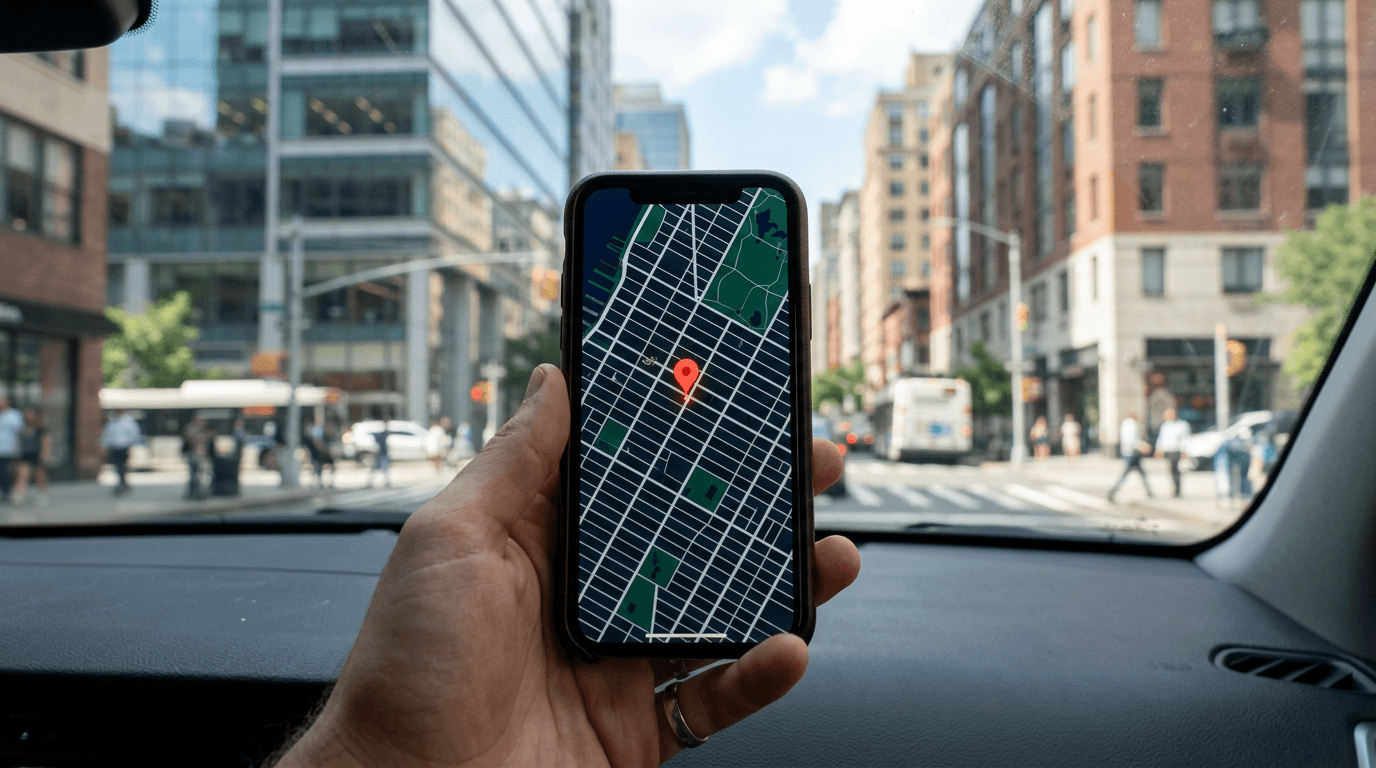
A customer in Deira types a localized query into their phone while sitting in traffic. They do not click through to a company's corporate history page, nor do they scroll past the map pack to read long-form service descriptions. They look solely at the local interface to check the driving distance, review averages, and whether the doors are open right now. If your google my business profile states you close at 5:00 PM when you actually shut at 6:00 PM, that customer routes directly to your nearest competitor. The local search environment operates entirely on entity trust and geographic proximity. When algorithms process a query with local intent, they bypass traditional web indexing to serve a structured knowledge panel. Managing this panel is not a passive marketing task; it is a strict operational requirement for capturing bottom-of-the-funnel demand in your immediate vicinity.
Quick Summary
Managing a local search presence requires structuring entity data, establishing exact map coordinates, and defending your listing against automated overwrites. A verified profile acts as the definitive source of truth for local intent queries, directly converting proximity-based searches into immediate foot traffic and inbound calls.
- Verification requires a fixed geographic location and permanent signage, strictly forbidding virtual offices.
- Primary category selection dictates which specific search queries trigger your listing's visibility.
- Routine data audits prevent competitor-suggested edits from maliciously altering your core operating hours.
- Responding to customer reviews feeds localized semantic signals back into the primary ranking algorithm.
Table of Contents
- 1. Claiming and Verifying Entity Data
- 2. Structuring Categories and Service Areas
- 3. Managing Real-Time Updates and Edits
- 4. Handling Local Reviews and Authority Signals
- 5. Defending Against Negative Local SEO
- Common Pitfalls & Troubleshooting
- FAQ
1. Claiming and Verifying Entity Data
To add business to google properly, you must prove undeniable physical control over the geographic space you are claiming. It is never enough to simply generate credentials, create google business account records, and submit a trade name. The modern verification ecosystem requires irrefutable visual evidence. Google now defaults to real-time video verification to combat massive waves of lead-generation spam.

Operators must record a continuous, unedited video demonstrating three distinct elements: their external location (capturing nearby street signs and the exterior architecture of the building), their physical business operations (unlocking the front door or turning on fixed, branded equipment), and their proof of active management (accessing a staff-only point-of-sale system or restricted back office). If the video cuts out, or if the operator attempts to create a google my business account using a coworking space or a virtual office P.O. box, the system flags the address as a shared workspace and immediately suspends the entity. Verification is not a formality; it is a strict audit of your physical footprint. Before proceeding with third-party verification assistants, operators should review the access guidelines of platforms like RapidWombat - AI-Driven SEO for UAE Businesses to ensure they retain primary ownership of their digital assets.
An Imprecise Map Pin Reroutes Foot Traffic to Competitors
The mistake practitioners actually make here is rushing the final map pin placement. They type in the legal street address, allow the automated system to drop the red pin in the geometric center of the building's footprint, and move on to the next task. If your entrance is located on the north side of a massive commercial complex in Dubai Marina, leaving that pin dead-center forces navigation apps to route your driving customers to the loading dock on the south side. You must manually drag the pin to the exact geolocation of your front door.
Practical rule: Drag your map pin to the exact GPS coordinates of your customer entrance, even if the auto-generated street address placement looks roughly correct on a zoomed-out view.
2. Structuring Categories and Service Areas
The primary category you choose determines the vast majority of your ranking potential for non-branded searches. Google restricts how you define what you do; you cannot invent a custom category but must select from their rigid, predefined taxonomy. If a plumbing contractor selects "Contractor" instead of "Plumber" as their primary category, their google my business visibility plummets for immediate repair queries. The underlying mechanic relies on a strict database hierarchy. The primary category dictates the overarching entity type and enables specific profile features. For example, selecting "Restaurant" allows you to upload a digital menu directly to the knowledge panel, while selecting "Retailer" unlocks product inventory feeds that sync with local stock levels.
Tertiary Categories Dilute Core Algorithmic Relevance
The critical error occurs when operators attempt to list every single tertiary service they offer as an additional category. A coffee shop that occasionally sells whole beans and mugs might add "Corporate Gift Supplier" and "Coffee Machine Supplier" to their profile. This directly dilutes the entity's core relevance. The algorithm struggles to identify the primary business model, dropping the business google location out of the top three map pack results for standard coffee queries. Stick exclusively to categories that describe what your physical business actually is, not an exhaustive list of every single minor item it happens to sell.
3. Managing Real-Time Updates and Edits
Accessing the backend requires logging into the native search interface, as the legacy standalone dashboard was fully retired. Managing google for business accounts now happens directly on the search engine results page (SERP) or via the Maps application itself. This interface shift means updates happen in a live environment, demanding immediate precision. The google business profile manager relies heavily on user-generated data and third-party data aggregators to keep information fresh. The platform's objective is accuracy for the end user, not necessarily convenience for the business owner.
Crowdsourced Edits Will Overwrite Your Operating Hours
The common mistake is treating the profile as a static directory listing that requires no ongoing maintenance. Practitioners fail to realize that Google constantly cross-references the profile data with municipal directories, web mentions, and crowdsourced user feedback. If a customer suggests that your store opens at 10:00 AM instead of 9:00 AM, the system may automatically accept and publish this edit without your explicit approval, particularly if that user has a high Local Guide trust score.
You must log in weekly to review and reject inaccurate suggested edits. Ignoring these automated alerts leads to a slow, silent drift in your operating hours, phone numbers, and even your listed website URL, directly bleeding local leads to competitors. When integrating automated API management to handle these alerts, ensure your data processing aligns with local compliance standards; reviewing the security frameworks of platforms like RapidWombat - AI-Driven SEO for UAE Businesses provides a baseline for how credential tokens should be securely processed.
4. Handling Local Reviews and Authority Signals
Reviews do significantly more than influence human conversion rates; they serve as a primary semantic data feed for the local search algorithm. When a customer leaves a text review, the natural language processing engine parses the content for semantic entities, localized geographic modifiers, and overall sentiment. A customer review stating "the best emergency AC repair in Sharjah" carries more ranking weight for those specific keywords than embedding the exact same phrase multiple times into your own website's homepage. The google business listing aggregates this feedback to determine whether your business actually performs the services you claim to offer.

Generic Owner Responses Waste Critical Localized Ranking Signals
The mechanical requirement here is the owner response. Replying to reviews signals active operational management to the algorithm and provides a secondary opportunity to reinforce localized entities. However, the mistake businesses consistently make is relying on automated, uniform responses like "Thank you for your feedback!" for every single customer interaction.
When you fail to contextualize a response, you waste a highly valuable localized entity signal. If a customer praises a specific service, your reply must explicitly acknowledge that exact service and the specific neighborhood where it was delivered. An unmanaged listing filled with generic owner responses signals to the algorithm that the entity is operationally stagnant, which gradually decays your map pack rankings. You must build a workflow that categorizes incoming reviews and matches them with varied, specific response templates.
5. Defending Against Negative Local SEO
The local search ecosystem in highly competitive commercial hubs is actively hostile. Competitors routinely exploit the crowdsourced suggested edit feature to mark a rival's listing as "Permanently Closed" or to alter the primary phone number to a dead line. Because the system inherently trusts older user accounts with established mapping histories, malicious edits can completely bypass automated spam defenses and go live instantly. Defending your operational territory requires setting up immediate alerts for any external data modifications.
Confirmed Web Citations Block Malicious Competitor Edits
The failure mode here is relying solely on Google's default email notifications, which frequently end up in spam folders or are batched into delayed weekly summaries. By the time the business owner realizes their primary phone number was swapped, an entire week of inbound sales calls has vanished.
Practitioners must rigidly lock down their name, address, and phone number (NAP) data across high-authority, tier-one directories. When Google's algorithm possesses a concrete, dense web of verified citations to check against, it automatically rejects conflicting crowdsourced edits. If the broader internet confirms your true phone number on twenty different authoritative registries, a malicious user's attempt to change it will fail the algorithmic cross-check. For high-volume locations requiring continuous oversight, operators often utilize platforms like RapidWombat - AI-Driven SEO for UAE Businesses to automate citation lockdowns and ensure profile integrity remains intact.
Common Pitfalls & Troubleshooting
1. The Soft Suspension (Keyword Stuffing)
- Symptom: Your listing suddenly drops out of the public search results entirely, but you can still log into the dashboard, which displays a red "Suspended" banner.
- Cause: You added geographic modifiers or unverified service names directly into the official business name field (e.g., writing "Elite Plumbers of Abu Dhabi" instead of your actual legal trade name, "Elite Plumbers LLC").
- Fix: Edit the business name field in your profile back to match exactly what appears on your official trade license and permanent storefront signage. Once corrected, submit a formal reinstatement request with a clear photo of your physical signage. This is the most frequent true cause of sudden ranking death.
2. The Cannibalizing Duplicate Listing
- Symptom: You rank effectively for obscure long-tail terms but completely fail to rank for your primary category, despite possessing strong reviews and immediate geographic proximity to the searcher.
- Cause: There is a second, unverified listing for your exact business at the same physical address, often created automatically by a third-party data scraper years ago. Google's algorithm splits your overall ranking authority between the two conflicting entities.
- Fix: Search for your exact business name and address directly on Google Maps. If a second listing appears, use the "Suggest an edit" feature to mark it as a duplicate of your primary, verified listing. This forces the system to merge the entities and consolidate the authority.
3. The "Not Approved" Service Area Status
- Symptom: You update your delivery radius or target service areas, but the edits sit in an orange "Pending" or "Not Approved" state for weeks without resolving.
- Cause: You defined a service area that vastly exceeds a two-hour driving distance from your verified central hub, directly violating the platform's proximity guidelines for local service businesses.
- Fix: Delete the vast, nationwide or emirate-wide service areas. Restrict your geographical boundaries strictly to local municipalities or specific postal codes that sit comfortably within a tight two-hour driving radius. The algorithm will typically clear the pending status within 48 hours.
4. The Missing Review Filter
- Symptom: A verified customer shows you a screenshot of a five-star review they submitted, but that review never appears publicly on your profile.
- Cause: Google's highly aggressive spam filter flagged the reviewer's IP address (which occurs frequently if the customer used your store's public Wi-Fi to leave the review) or the system detected a sudden, unnatural spike in your overall review velocity.
- Fix: Immediately stop asking customers to leave reviews while they are physically standing inside your premises connected to your local network. Implement a post-visit SMS or email follow-up sequence so the reviews originate from varied residential IP addresses across the city.
5. The "Ghost" Holiday Hours
- Symptom: Foot traffic plummets to zero on a major regional public holiday, despite your business remaining open and running a massive local promotion.
- Cause: You neglected to set specific holiday hours in the dashboard. When a recognized public holiday occurs, the system slaps a bright orange warning on your listing stating "Holiday hours may differ," which actively discourages customers from making the drive.
- Fix: Input your exact operational hours for every single upcoming public holiday in the 'Special Hours' tab at least two weeks in advance. The ambiguous orange warning will be replaced by a reassuring, highlighted confirmation that your business is actively open.
FAQ
Do I need a physical address to rank in local search?
You must possess a real physical address to receive the initial verification credentials, but if you operate a service-area business (such as a mobile detailing service), you can hide that address from public view after verification is complete. You absolutely cannot use a P.O. Box or a virtual office for this process.
How often should I upload photos to my profile?
Consistency matters significantly more than total volume. Uploading two high-quality, geographically relevant images per week signals active operational management to the algorithm much more effectively than dumping fifty photos at once and then abandoning the profile for an entire year.
Why did my suggested edit get rejected immediately?
Manual edits are routinely rejected if the data you submitted conflicts with what the algorithm finds on authoritative third-party data aggregators. If your main website and local municipal directories list your closing time as 5:00 PM, the system will instantly reject your attempt to change it to 6:00 PM on the profile alone.
Can I rank outside of the specific city where my business is physically located?
Organic map pack rankings are strictly bound by physical proximity to the searcher's mobile device. You will rarely appear in the top three map results for searches conducted in a neighboring city unless the local competition in that specific area is practically nonexistent.
Can I create a profile for an online-only e-commerce store?
No. The platform's operational guidelines strictly forbid digital-only businesses from occupying a map pin. If you do not have a physical location where customers can interact with you face-to-face, or a local service area where you physically travel to customers, your listing will be permanently suspended upon its first manual review.