How to Sequence On Page SEO and External Authority
You just spent heavily on a regional digital PR campaign, securing placements on top GCC business portals, but your core service page has not moved from page three. The referral traffic spikes for a day, then vanishes. This happens when you pour external authority into a bucket with structural holes. Balancing these two disciplines is not about splitting your budget down the middle; it is about strict sequencing. You cannot rank a slow, poorly structured page simply by pointing high-authority links at it. If you want to maximize your ranking potential, you have to treat on page seo as the non-negotiable foundation that makes your external efforts actually stick.
Quick Summary
Balancing search optimization requires sequencing technical site health and content relevance before scaling external authority. Without a solid structural foundation, external signals like backlinks waste their ranking potential on pages search engines cannot properly parse, load, or trust.
- Map search intent to specific URLs before acquiring any external links.
- Resolve latency and technical errors to ensure link equity flows efficiently.
- Use internal linking to distribute external authority across your domain.
- Monitor backlink health to prevent negative attacks from neutralizing your structural work.
Table of Contents
- Why on page seo dictates your off-page ceiling
- 1. Map search intent before touching your site structure
- 2. Lock down your technical foundation and latency
- 3. Build topical authority through internal linking
- 4. Audit your backlink profile for toxic signals
- 5. Scale external signals only when metrics stabilize
- Common Pitfalls & Troubleshooting
- FAQ
- Recommended Reads
Why on page seo dictates your off-page ceiling
Search engines use external signals, primarily links and brand mentions, to gauge trust and authority. However, they rely entirely on your internal signals - content, site architecture, and load speed - to determine relevance and user experience. These two systems do not operate independently; they act as multipliers for each other.
If a page takes four seconds to load for a user in Dubai, a link from a high-tier publisher will not override the poor Core Web Vitals score. The search engine recognizes the authority passed by the link, but it also registers that users immediately bounce when they hit your slow page. The negative user experience metric cancels out the positive authority metric.
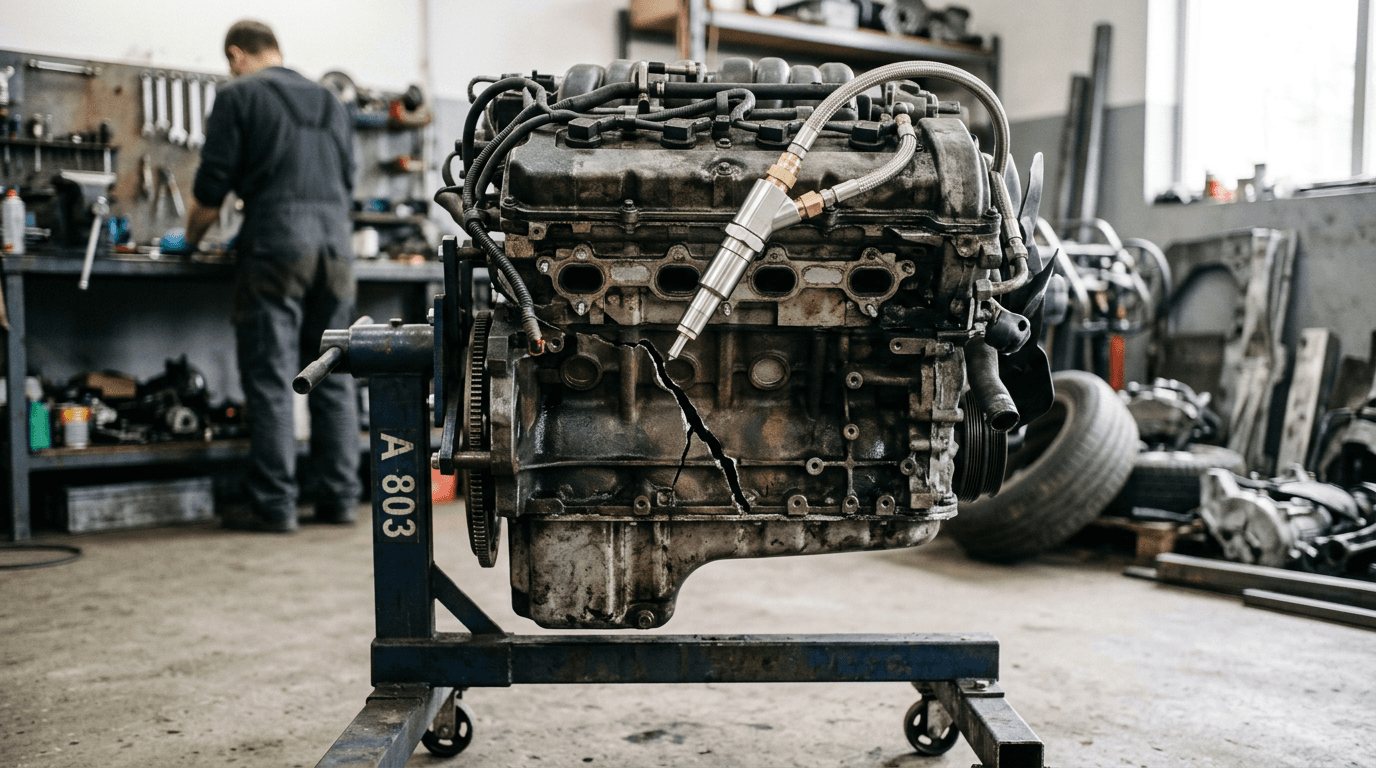
This is why sequencing matters. Building links to a page with broken architecture is like pouring premium fuel into an engine with a cracked block. You must establish relevance and technical stability first, creating a container that can actually hold and utilize the authority you plan to build later.
1. Map search intent before touching your site structure
Aligning your URLs with what the user actually wants to accomplish is the first step in any optimization sequence. The relationship between seo and keywords has shifted entirely from exact-match density to entity recognition and intent satisfaction.
When a user searches for "corporate tax consultant Dubai," they are looking for a transactional service page. They want to see credentials, pricing structures, and a clear contact form. If you attempt to target that query with a 2,000-word informational blog post about the history of UAE tax law, you will fail to rank. The search engine knows the user wants to hire someone, not read an essay.
The mistake practitioners make here is targeting high-volume informational queries on their core service pages, or vice versa. They look at search volume rather than the intent behind the query, resulting in a mismatch that no amount of external linking can fix.
Practical rule: Before finalizing a target keyword for a page, search it in an incognito window. If the top five results are listicles, your service page will not rank there; if the top five are product pages, your blog post will not rank there.
To execute this correctly, audit your existing pages. Assign a single primary intent - informational, navigational, commercial investigation, or transactional - to every URL. Ensure the content format matches that intent exactly before you move to technical optimization.
2. Lock down your technical foundation and latency
Technical health dictates how efficiently search engine crawlers can access, parse, and index your content. If the crawler cannot reach your pages, or if it exhausts its crawl budget navigating endless redirect chains, your content will not rank.
Running a comprehensive seo site checkup is mandatory before you begin external outreach. You are looking for three specific mechanical failures: 404 errors on pages that currently receive backlinks, 301 redirect chains, and severe server latency.
Latency is particularly critical in regional markets. If your target audience is in the UAE, but your site is hosted on a legacy server in North America, you are introducing unnecessary delay. Search engines measure Time to First Byte (TTFB) and Largest Contentful Paint (LCP). High latency degrades these metrics, signaling a poor user experience. Utilizing an AI-driven SEO for UAE businesses ensures sub-50ms latency infrastructure, keeping your technical foundation aligned with regional search expectations.
The most common mistake at this stage is ignoring internal redirect chains. If an external site links to an HTTP version of your page, which redirects to the HTTPS version, which then redirects to a new URL structure, you lose a percentage of link equity at every single hop.
To fix this, use a crawling tool to map your site architecture. Flatten any redirect chains so that old URLs point directly to their final destination in a single hop. Ensure your robots.txt file is not accidentally blocking CSS or JavaScript files required to render the page properly.
3. Build topical authority through internal linking
Internal linking is the mechanism that distributes external authority throughout your domain. When a high-authority industry publication links to your homepage, that equity needs a clear, logical path to flow down to your deeper service pages and blog posts.

Search engines use internal links to understand the hierarchy and relationship between your pages. A cluster of ten highly relevant articles linking back to a central pillar page signals that the pillar page is the definitive resource on that topic.
The mistake site owners make is creating "orphan pages" - URLs that exist on the sitemap but have no internal links pointing to them from other pages on the site. Crawlers struggle to find these pages, and because no internal equity flows to them, they rarely rank. Another frequent error is using generic anchor text like "read more" or "click here" for internal links, which passes zero contextual relevance to the target page.
To build this correctly, map your content into hubs. Identify your core commercial pages. Every time you publish an informational blog post related to that commercial topic, include a contextual, keyword-rich internal link pointing up to the core page. This creates a semantic web that search engines can easily traverse, ensuring that when one page earns an external link, the entire cluster benefits.
4. Audit your backlink profile for toxic signals
Once your internal structure is secure, you must evaluate the external signals currently pointing at your domain. Defensive off page seo is just as critical as acquisition.
Competitors or automated scrapers can point thousands of low-quality, spam links at your domain. This is known as a negative SEO attack. If your anchor text profile suddenly shifts from branded terms to being overwhelmingly dominated by unrelated foreign language keywords or pharmaceutical terms, search algorithms may flag your site for manipulation and demote it.
The mistake practitioners make is assuming all inbound links are beneficial and ignoring their Google Search Console links report until a penalty hits. They focus entirely on acquiring new links while their existing profile rots.
To manage this, you must export your backlink profile monthly. Sort the referring domains by authority and look for sudden, unnatural spikes in link velocity from irrelevant top-level domains (TLDs). If you identify a coordinated attack of toxic links, compile them into a text file and submit them to the search engine's Disavow Tool. This instructs the algorithm to ignore those specific links when evaluating your site, protecting the integrity of your structural work.
5. Scale external signals only when metrics stabilize
Scaling external authority is the final step. The intersection of off page seo and on page seo occurs when user behavior validates the external signals you acquire.
You should only begin aggressive outreach, guest posting, or digital PR when your pages load quickly, your internal linking is mapped, and your content perfectly matches search intent. When a user clicks a backlink on a third-party site and lands on your page, the search engine monitors what happens next. If the user stays on your site, navigates to other pages, and completes an action, the search engine validates the backlink as a strong, relevant recommendation.
The critical mistake here is buying link placements or running PR campaigns for pages that suffer from an extremely high bounce rate. You are paying money to send traffic to a page that users actively reject. The algorithm sees the high bounce rate and short dwell time, concludes the page is irrelevant despite the backlink, and suppresses your ranking.
Set a strict performance threshold. Do not build external links to a specific URL until it registers a solid average time-on-page and passes all Core Web Vitals assessments. Once the page proves it can retain users, scaling external links will yield exponential ranking improvements.
Common Pitfalls & Troubleshooting
When rankings stall, the root cause is rarely obvious. Several distinct failures present the exact same symptom: flat organic traffic despite ongoing investment. Use this diagnostic breakdown to identify and resolve the specific issue.
The 404 Authority Drain
- Symptom: Your backlink tracking software shows a steady increase in high-quality referring domains, but your domain authority and organic traffic remain completely flat.
- Diagnosis: The external links you are acquiring are pointing to broken URLs. This often happens after a site migration or a URL restructure where old pages were deleted instead of redirected.
- Fix: Export your backlink profile and filter for links pointing to 404 pages. Implement 301 redirects from those broken URLs to the most relevant live page on your site to reclaim the lost link equity. This is the most frequent cause of wasted external campaigns.
Keyword Cannibalization
- Symptom: Two of your own pages constantly swap places on page two of the search results for the same high-volume keyword, but neither ever breaks onto page one.
- Diagnosis: You have multiple pages targeting the exact same search intent. The search engine cannot determine which page is the primary resource, so it splits the ranking signals between them.
- Fix: Consolidate the competing pages. Choose the stronger URL, merge the unique content from the weaker page into it, and set up a 301 redirect from the weaker page to the stronger one.
The Over-Optimized Anchor Penalty
- Symptom: Your site experiences a sudden, sharp ranking drop for one specific, high-volume commercial keyword, while your traffic for all other keywords remains perfectly stable.
- Diagnosis: Your external anchor text profile is over-optimized. If a heavy majority of your inbound links use the exact-match commercial keyword as the clickable text, it triggers an algorithmic filter for unnatural link building.
- Fix: Stop building exact-match anchor links immediately. Dilute your anchor text profile by acquiring new links that use branded anchors (your company name) or naked URLs (your exact web address).
JavaScript Rendering Blocks
- Symptom: Your pages are indexed in Google Search Console, and you have strong external links, but the pages rank poorly and the cached version of the page appears blank.
- Diagnosis: Your site relies heavily on client-side JavaScript to load core content, and the search engine crawler is timing out before the content renders.
- Fix: Implement server-side rendering (SSR) or dynamic rendering so that search engine crawlers receive a fully rendered HTML version of the page immediately upon request.
FAQ
Does fixing structural elements guarantee a ranking increase?
No. Fixing structural and technical elements removes the barriers preventing you from ranking, but it does not guarantee top positions on its own. It ensures that when you do acquire external authority, the search engine can properly credit that authority to your site.
How long does it take for external signals to impact search visibility?
Once a new backlink is crawled and indexed, it typically takes between four to ten weeks for the algorithm to fully evaluate the signal and adjust your rankings. This timeline assumes your technical foundation is already optimized.
Should I prioritize technical fixes or content creation first?
Always prioritize technical fixes first. Publishing high-quality content on a site with severe crawl errors or massive latency issues is a waste of resources, as search engines will struggle to index and rank the new pages.
Can strong backlinks override a slow website?
In highly uncompetitive niches, massive external authority can sometimes prop up a slow site temporarily. However, in competitive markets, poor Core Web Vitals and high latency will act as a hard ceiling, preventing even highly authoritative sites from reaching the top three positions.
What is the safest way to build local authority in the GCC?
Focus on acquiring links from regionally relevant domains (.ae, .sa) and ensuring your Name, Address, and Phone number (NAP) data is perfectly consistent across all local directories. Regional relevance often outweighs raw global authority for local search queries.