The Future of Online Marketing: Trends for 2026
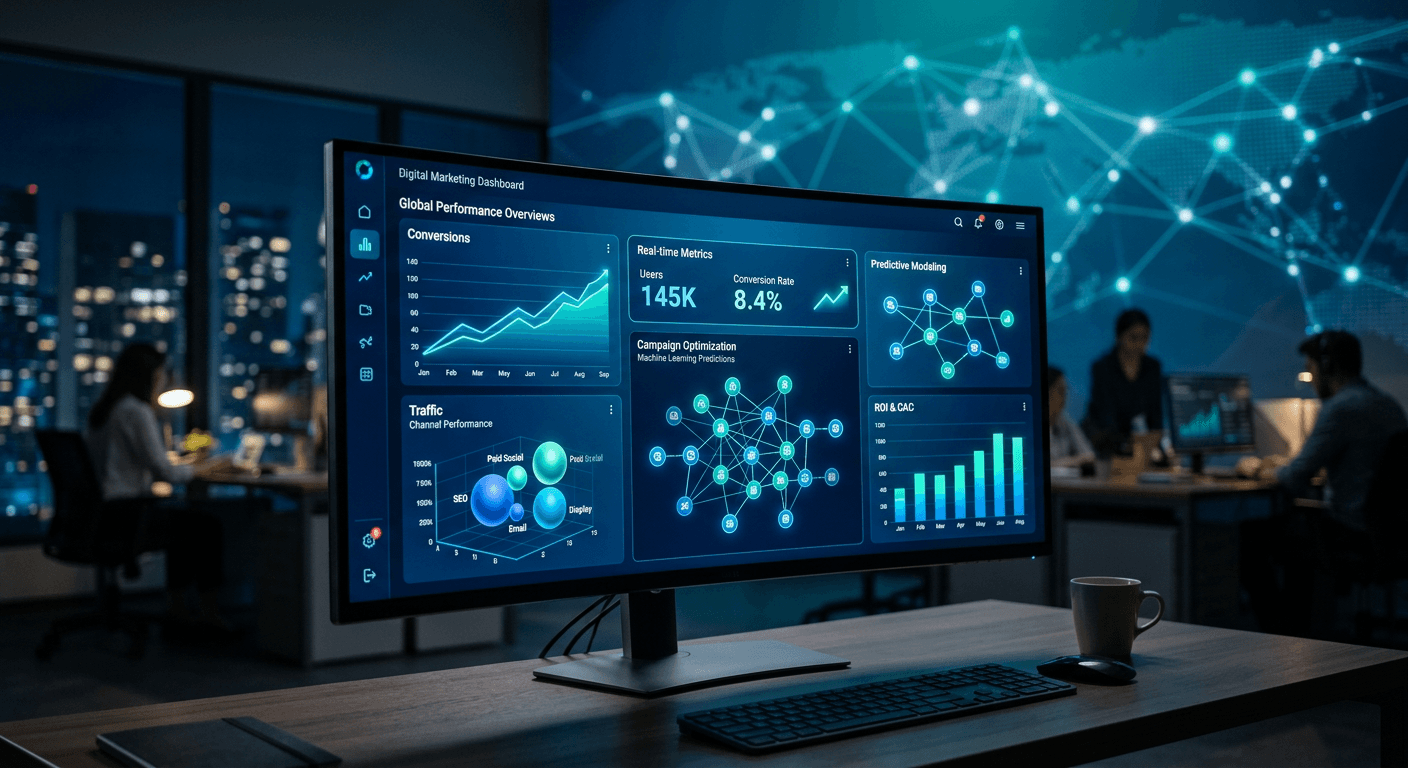
The landscape of online marketing online is undergoing a profound transformation as we approach 2026, driven by the convergence of generative AI, privacy-centric data collection, and highly personalized customer journeys. Marketers can no longer rely on broad-stroke advertising strategies; instead, they must pivot toward predictive analytics and high-intent engagement models that leverage the massive data streams provided by the google marketing platform to maintain a competitive advantage in an increasingly saturated digital marketplace.
Quick Summary
The future of digital marketing hinges on the shift from manual campaign management to automated, AI-driven orchestration that prioritizes user privacy and long-term value. Success in 2026 requires integrating technical infrastructure with human-centric storytelling.
- Transitioning to first-party data strategies to mitigate cookie depreciation.
- Utilizing machine learning for predictive customer lifetime value (CLV).
- Enhancing ecommerce and seo through semantic search and voice-assisted discovery.
- Adopting omnichannel transparency via comprehensive data suites.
Table of Contents
- The Strategic Shift in Digital Marketing
- Leveraging the Google Marketing Platform
- The Intersection of Ecommerce and SEO
- Privacy-First Marketing Mechanics
- Artificial Intelligence and Predictive Analytics
- Comparison of Marketing Modalities
- Real-World Insights and Takeaways
- FAQ
- Recommended Reads

The Strategic Shift in Digital Marketing
By 2026, the foundational pillars of digital advertising have moved away from traditional behavioral tracking toward contextual relevance. As regulatory pressures regarding data sovereignty increase, brands are forced to innovate through zero-party data strategies, where customers willingly share preferences in exchange for hyper-personalized experiences. This shift requires a deep understanding of customer intent that goes beyond simple demographic filtering.
Furthermore, the integration of google digital marketing tools has become a prerequisite for operational efficiency. Modern marketing teams are no longer just creative departments; they function as data science units, interpreting complex user signals to adjust bidding strategies and content delivery in real-time. This evolution emphasizes the need for technical proficiency and strategic alignment between sales and marketing silos.
Leveraging the Google Marketing Platform
The google marketing platform remains the industry benchmark for managing complex, cross-channel campaigns. By consolidating analytics, ad server technology, and optimization tools, it allows enterprise organizations to create a unified view of the customer. In 2026, the focus has shifted toward automated creative asset generation and cross-device attribution modeling that ignores traditional browser-based limitations.
Pro Tip: Leverage the automated bidding features within the platform to allow machine learning models to adjust to real-time market volatility. By feeding high-quality, verified first-party data into these models, you significantly improve conversion accuracy compared to relying solely on platform-agnostic signals.
Successful utilization of these tools involves deep-linking organizational data with search intent. When used correctly, these systems provide a feedback loop that informs not just where to spend, but what type of content resonates most effectively with high-value segments, thereby optimizing the return on ad spend (ROAS) across all digital touchpoints.
The Intersection of Ecommerce and SEO
The relationship between ecommerce and seo has moved past keyword stuffing and backlink acquisition into the realm of semantic search and user experience optimization. Search engines now prioritize page speed, Core Web Vitals, and the helpfulness of content, making technical SEO a critical component of product visibility. In an era where AI-generated answers often precede organic search results, your product pages must provide unique, value-driven information that automated snippets cannot replicate.
Ecommerce success in 2026 demands a localized and contextual approach to SEO. This means optimizing for visual search, voice assistants, and augmented reality (AR) product previews. By structuring data to be machine-readable, retailers can ensure their products appear in intelligent commerce carousels and shopping features, capturing intent precisely when the consumer is ready to transact.
Privacy-First Marketing Mechanics
With the final phase-out of third-party cookies, privacy-first marketing is no longer an option but a requirement. Companies that fail to establish robust data governance frameworks risk losing the trust of their target audience and violating increasingly strict international regulations. This has triggered a move toward clean room technology, where advertisers and publishers can share insights without ever exposing individual-level user data.
Technically, this means moving toward Server-Side GTM and other infrastructure-heavy tracking solutions. By managing data collection on the server side, marketers gain better control over the data being sent to third-party vendors, ensuring compliance and improving site performance. This architecture allows for more precise measurement while strictly adhering to user consent preferences.
Artificial Intelligence and Predictive Analytics
Artificial Intelligence is no longer just a trend in digital marketing; it is the engine behind all predictive analytics. In 2026, marketers use AI to forecast churn, predict purchasing patterns, and automate personalized email or ad flows that trigger at the exact micro-moment of need. This proactive approach to marketing allows brands to nurture leads based on behavioral signals rather than historical assumptions.
This shift also enables dynamic pricing and inventory management. By syncing predictive demand models with ad spend, companies can reduce wasted ad budget during low-intent periods and maximize reach during peak demand. This capability effectively bridges the gap between operational supply chain management and consumer-facing digital promotion.
Comparison of Marketing Modalities
| Feature | Traditional Marketing | Modern AI-Driven Marketing | Focus Area |
|---|---|---|---|
| Data Usage | Third-party cookies | First-party / Zero-party | Privacy |
| Personalization | Demographic segments | 1:1 Predictive modeling | Customer Experience |
| Optimization | Manual A/B testing | Autonomous ML-testing | Performance |
| Attribution | Last-click | Data-driven / Cross-channel | ROI Measurement |
Real-World Insights and Takeaways
Based on observed industry patterns, the most successful brands of 2026 are those that have stopped treating data as a byproduct and started treating it as a strategic asset. Investing in a robust data architecture pays for itself within the first year by reducing customer acquisition costs (CAC). Furthermore, human-in-the-loop AI is the golden standard; automation should handle the heavy lifting, but creative strategy must remain directed by human empathy and brand identity.
Do not attempt to digitize every aspect of the funnel simultaneously. Start by identifying the highest-friction point in your customer journey and applying a targeted, technology-first solution. Whether it is improving site performance or enhancing search discoverability, incremental progress toward a data-integrated marketing ecosystem is more sustainable than a full-scale, unverified overhaul.
FAQ
-
How does the end of third-party cookies affect my current search campaigns? It necessitates a pivot toward first-party data. You should focus on building direct relationships through newsletters, loyalty programs, and gated high-value content to keep your audience engaged without relying on tracking pixels.
-
Is SEO still relevant in an era of generative AI? Yes, but its role has changed. SEO is now about being the primary source of truth. AI models are trained on high-quality content; by establishing your brand as an authoritative source, you ensure your information is surfaced within AI-driven search results.
-
What is the most critical metric for marketers in 2026? Customer Lifetime Value (CLV) combined with Customer Acquisition Cost (CAC) efficiency. The goal is to maximize the profitability of your existing base while maintaining a sustainable growth rate for new acquisitions.
-
How can small businesses compete with large enterprises using these tools? Small businesses benefit from agility. By using google digital marketing tools, you can run hyper-local, high-intent campaigns that larger, slower organizations often miss, allowing you to dominate niche segments effectively.