What is Artificial Intelligence? A Beginner's Guide
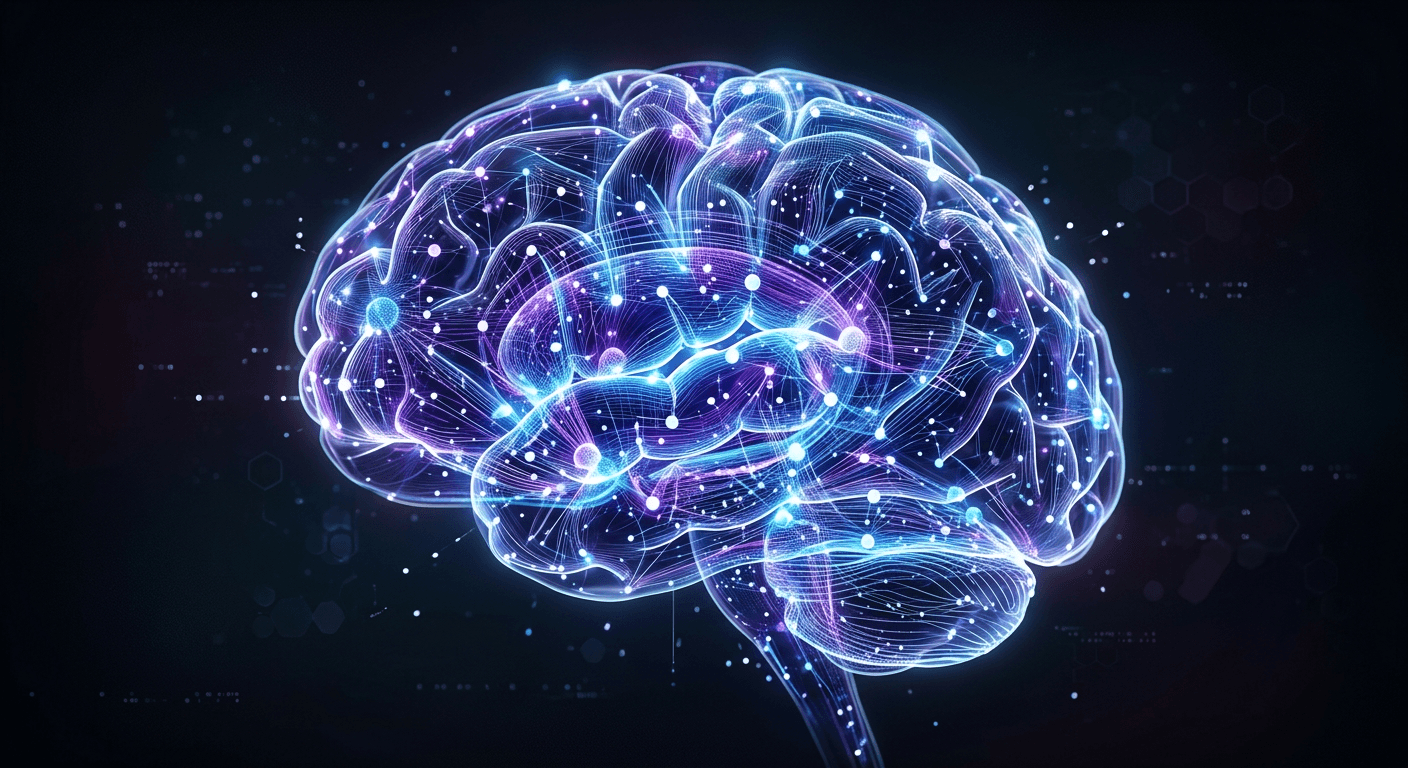
Artificial intelligence represents the simulation of human intelligence processes by machines, particularly computer systems. At its core, understanding what is artificial intelligence involves examining how algorithms process vast datasets to perform tasks that typically require human cognition, such as visual perception, speech recognition, decision-making, and language translation. As these systems evolve, they transition from static rule-based programs to dynamic, learning entities capable of iterative improvement.

Quick Summary
Artificial intelligence is the field of computer science dedicated to creating systems capable of performing tasks that historically required human intelligence. It utilizes machine learning, neural networks, and data processing to analyze patterns and generate autonomous outputs.
- Mimics cognitive functions like problem-solving and reasoning.
- Relies on large-scale data ingestion and pattern recognition.
- Operates through predictive modeling rather than rigid programming.
- Powers diverse tools ranging from generative writing assistants to complex industrial robotics.
Table of Contents
- Quick Summary
- Foundations of Artificial Intelligence
- Machine Learning and Neural Networks
- Artificial Intelligence for Writing and Creativity
- Comparative Analysis of AI Capabilities
- Real-World Implementation and Ethical Considerations
- Frequently Asked Questions
- Recommended Reads
Foundations of Artificial Intelligence
To understand what is artificial intelligence AI, one must distinguish between Narrow AI and General AI. Most systems currently in operation, such as recommendation engines or voice assistants, are considered Narrow AI. These systems are highly specialized, performing a singular task - such as language translation or image classification - with extreme efficiency. They do not possess consciousness or the ability to apply knowledge to unrelated domains, which remains the exclusive domain of human cognition.
Historically, AI research began by attempting to hard-code human logic into computers. This symbolic AI approach relied on "if-then" statements to simulate reasoning. However, this method proved brittle when faced with the ambiguity and complexity of the real world. Modern artificial intelligence has shifted toward probabilistic models, where systems learn from historical data to make educated guesses rather than strictly following explicit instructions. Visit the official resource portal to learn more about how these computational architectures are structured.
Core Components of AI Systems
At the foundational level, all AI systems consist of data, algorithms, and computational power. The data serves as the training fuel, while the algorithms provide the mathematical framework for identifying correlations within that data. Without sufficient processing power to handle the iterative computations required, these systems would remain theoretical concepts trapped within academic journals.
Machine Learning and Neural Networks
Machine learning is the primary engine driving modern advancements in the field. Unlike traditional programming, where a developer writes code for every possible outcome, machine learning enables a system to adjust its own parameters based on error feedback loops. Through a process called backpropagation, the model identifies where its predictions diverged from reality and adjusts its internal "weights" to improve accuracy in future iterations.
Neural networks, inspired by the architecture of the human brain, serve as the standard model for deep learning. These networks consist of layers of interconnected nodes, or "neurons," that process data hierarchically. In a image recognition system, early layers might detect simple lines or edges, while deeper layers synthesize these components into recognizable objects like faces or vehicles. This hierarchical processing allows for the resolution of incredibly nuanced problems.
Pro Tip: When evaluating machine learning models, always prioritize the quality and diversity of your training data over the raw volume. A smaller, cleaner dataset often leads to more reliable, bias-free results than a massive, uncurated repository.
Artificial Intelligence for Writing and Creativity
The emergence of sophisticated large language models has transformed the landscape of content generation. Using artificial intelligence for writing is no longer about simple spell-checkers; it is about predictive text synthesis that understands context, tone, and intent. These tools are essentially massive statistical engines that predict the most likely next word in a sequence based on billions of parameters ingested during training.
An AI content creator functions by analyzing a user's prompt and mapping it against the learned linguistic structures of its training data. Whether you are using an AI essay writer to draft structural outlines or generate complex research summaries, the primary value lies in the speed of iteration. By automating the "blank page" phase of writing, these tools allow human creators to focus on high-level editing, fact-checking, and strategic refinement. Review our privacy policy to understand how data usage is handled in these creative applications.
Comparative Analysis of AI Capabilities
| Capability | Traditional Software | Narrow AI | Generative AI |
|---|---|---|---|
| Decision Making | Hard-coded rules | Pattern-based | Probabilistic/Generative |
| Adaptability | Low (requires update) | Moderate | High (learns context) |
| Output Type | Deterministic | Analytical/Data-driven | Creative/Content-driven |
Traditional software is designed to produce identical results given the same input, providing consistency and reliability. Narrow AI, however, is designed to extract meaning from complex, unstructured data, making it ideal for tasks like financial forecasting or diagnostic imaging. Generative AI pushes the boundary further by creating entirely new artifacts, such as images, code, or prose, that did not exist previously.
Real-World Implementation and Ethical Considerations
Implementing AI across business operations requires a clear understanding of the risks associated with algorithmic bias. Because AI models learn from historical data, they often inherit the biases present in that data. If a recruitment tool is trained on historical hiring data that favored a specific demographic, the model will likely replicate those biases in its future recommendations. Rigorous auditing and human-in-the-loop oversight are essential to mitigate these risks.
Beyond bias, there is the challenge of the "black box" problem. In many complex neural networks, it is difficult for developers to explain exactly why a system arrived at a specific decision. This lack of interpretability is a significant hurdle in highly regulated industries like law and healthcare. Ensuring that organizations read the terms and conditions of any third-party AI service provider is a critical step in professional governance.
Frequently Asked Questions
Can an AI essay writer produce entirely original work? AI does not "create" in the human sense; it synthesizes existing information to generate statistically probable outputs. While the specific sequence of words may be original, it is fundamentally a remix of the data it was trained on.
Does artificial intelligence for writing replace human authors? No, it serves as a force multiplier. It excels at drafting and brainstorming but lacks the nuanced critical thinking, emotional intelligence, and accountability that a human writer brings to professional content.
How does an AI content creator handle factual accuracy? Most LLMs are susceptible to "hallucinations"—the creation of false information presented as fact. It is imperative to verify all technical, historical, or quantitative data provided by an AI tool.
Is the knowledge of what is artificial intelligence AI necessary for every professional? Understanding the basic mechanics of AI is becoming a literacy requirement, much like using a computer or the internet was in previous decades. You do not need to be a developer, but you should understand how to prompt and evaluate AI-generated outputs.